Master Data Management (MDM)
It’s Not Just for Master Data Anymore
MDM historically has been defined to include customers, suppliers, employees, and products – the information that is critical to the business' competitive position and the data, as an information asset, that distinguishes one company from another in a like industry. Organizations place a very high value on the quality of their master data, and they often initiate very large projects to ensure enterprise-wide sharing of common master data files.
However, while having consistent customers or products has measurable value, having consistent master data alone does not ensure that the business will be able to operate in a complete, consistent, correct, and transparent way. To have a truly unified information system that unlocks the full value of information assets, other data types and structures need to be included in the context of enterprise data. By way of example, having a common structure for a product doesn’t necessarily include having common units of measure. If the reference data in various parts of the system allows a user to select "gram", "gr", and "g" from a list of values, there is an inconsistency in how orders are placed, how products are labeled, or how a bill of materials is constructed. If a transaction is recorded differently (with a different chart of accounts), in different systems, or if costing is done differently for each of the subinventories, then operations are not done consistently, economies of scale are lost, and reconciliations are required. The same happens if there are disparate roles, responsibilities, and levels of authority among jobs or positions with the same title. If data is housed in different systems or different instances, then the view of the enterprise data is not complete. If the accounting team is allowed to manipulate data in thousands of spreadsheets, it may not be correct, and it certainly is not transparent.
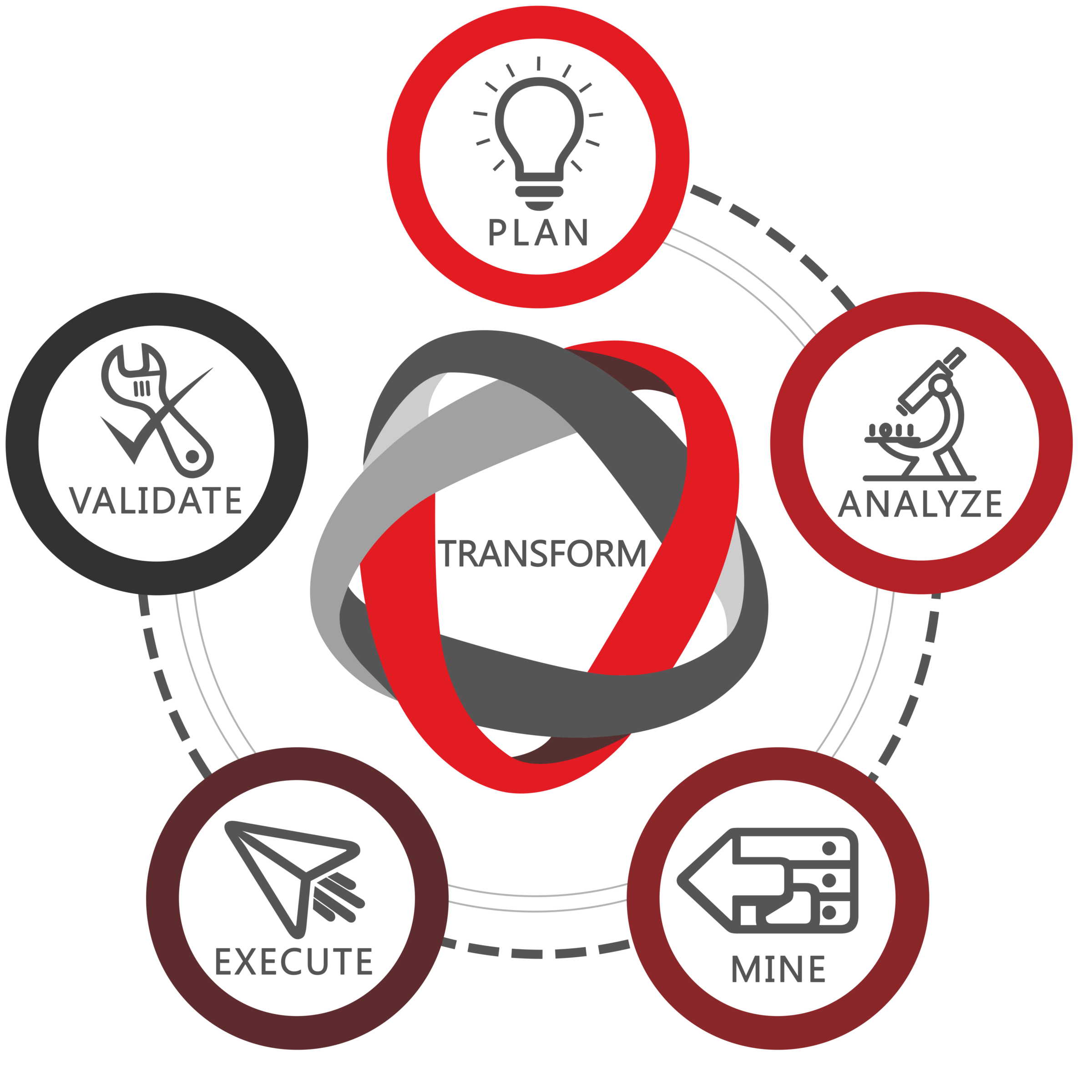
With those concerns in mind, it is time to expand the concept of MDM to include consistent reference data, consistent underlying data structures (such as calendars, organization units, ledgers, or charts of accounts), and even the elimination or control of spreadsheets as vital to ensuring the accuracy, accountability, uniformity, and ultimately the quality, trust, and usability of enterprise information. Within Oracle® E-Business Suite, eprentise has taken the first step in broadening the scope of Master Data Management to include all of the attributes of enterprise data – metadata, reference data, configuration data, data structures, and even consistency among different E-Business Suite instances – driving toward the concept of a single, global source of truth that is complete, consistent, and correct. eprentise is proud to have been included in the Gartner Cool Vendors in MDM, 2011 report.
![]() |
About the Gartner Cool Vendor Selection Process:
Gartner is a registered trademark of Gartner, Inc. or its affiliates. The Gartner listing does not constitute an exhaustive list of vendors in any given technology area, but rather is designed to identify interesting, new and innovative vendors, products and services. Gartner disclaims all warranties, expressed or implied, with respect to this research, including any warranties of merchantability or fitness for a particular purpose.
Each year, Gartner identifies a Cool Vendor as a company that offers technologies or solutions that are: innovative—enabling users to do things they couldn’t do before; impactful—have, or will have, business impact (not just technology for the sake of technology); and intriguing— have caught our interest or curiosity in approximately the past six months.