The act of selling a part of a business, whether you call it a spin-off, a demerger, or a divestiture, is fundamentally different from – but not quite opposite of – acquiring or merging with another business. The main difference is obviously that a business is being sold rather than bought – well, from the seller’s perspective anyway. In fact, a high percentage of acquisitions result from buying a piece of a business that has been split off from another business. Just like a share of stock on the NYSE, each transaction has two sides, a buyer and a seller, the two of which have different opinions of the value of that stock or business at a particular time. A business is an asset that, like shares of stock, appreciates or depreciates in value with time depending on how well its assets, liabilities, and operations are managed. The seller might think that the cash garnered from the sale of a business should be worth more than the present value of the company plus the present value of future cash flows, but the buyer obviously disagrees.
Divestitures and acquisitions are similar in that they are often different sides of the same transaction, and they are both strategies that companies use to maximize shareholder value. Divestitures have a lower profile than acquisitions because often lower performing parts of a company are sold off so there isn’t the hoopla around the deal. Both acquisitions and divestitures are complex procedures, and executives often underestimate the necessary steps required for a successful business change of such caliber. Mergers & acquisitions are relatively better understood and prepared for than divestitures, but the recent reports of a possible economic recession have companies switching gears and taking advantage of the capital and streamlined operations provided by the latter. The key question becomes, “Is it the right time to sell my business?” The answer is a complex one, but there are some fundamental steps that should be taken to make sure you maximize the value of your business if you do decide to sell it.
A recent KPMG International survey of more than 400 mergers & acquisitions professionals indicated that almost half of corporate sellers and roughly 25% of private equity firms thought that they had failed to maximize the value of their latest sale.1 When asked what the causes of lost value might have been, almost 70% of both corporate sellers and private equity firms, the largest response of any category, cited loss of control over the disposal time frame as a catalyst to value loss,2 indicating that the act of managing the time requirements of a divestiture and the resulting companies is an often overlooked or undervalued piece of the equation.
It would be nice if there were an instruction manual for how to effectively divest, but the simple fact is that it does not exist. You will be able to find a handful of publications that boast some helpful hints that consist of “key questions to ask in a divestiture”3 or “What to Disclose and What to Keep Private During Divestiture”, but unlike acquisitions, selling a part of a business is not something that companies do on a regular basis, so there are few, if any formal methodologies. For many companies, a divestiture is something that is done only once. Specialized teams work on their part of the sale – the lawyers and investment bankers work on the sales agreement, the accountants work on the financials, and the IT people work on the systems. There are few post-divestiture consulting practices, only a few people who have checklists and the skills to manage all the cross-functional activities, and other than the GAAP accounting rules, few industry standards. Many employees do not even hear that their part of business is to be sold until after the paperwork is complete.
In order to add value, companies need to prepare for a divestiture and develop a strategy for continually evaluating those parts of the business that would make good acquisition targets. Selling part of the business can add operating cash, narrow the focus, and provide direction to the remaining part of the business. The parts of the business that are being sold have the opportunity to create a new company, to develop a new and different culture from the parent company, and to grow without some of the burdens of the parent company.
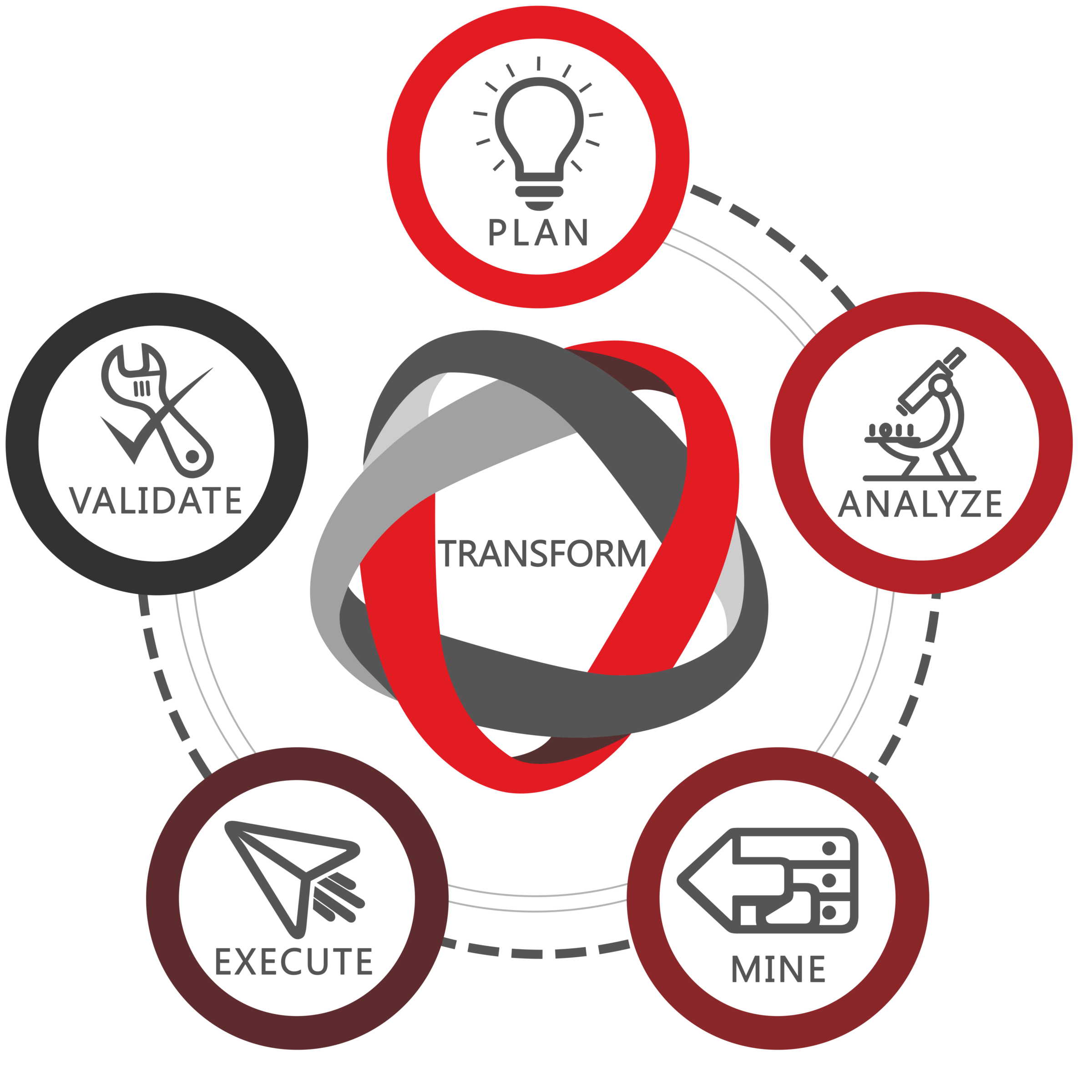
A successful divestiture strategy has several components:
- Prepare Early. Determine the value of each area of the business. Evaluate the strengths and weaknesses so that you can capitalize on the strengths that will provide the greatest value to a prospective buyer. Begin to prepare a “due diligence” package for each part of the company – whether it is a product line, a region, a department, or a legal entity. The due diligence package should include the following:
- Mission statement – Why you are doing what you are doing and how does that tie into a long-term vision for the entity?
- Value proposition – What are the benefits, value, and ROI? Why would someone pay for this part of the business? What are the current assets of the business?
- Product or Service – What are you selling? How are you pricing it?
- Marketing and Sales Strategy – Who is your market? How do you reach them? Who are your current customers? Why do they buy from you? Who are your competitors?
- Operations and Operating Assumptions – length of sales cycle, sales per month, revenue per sale, accounts receivable timing, major suppliers, headcount
- Financial Projections – Develop a 5 year plan.
- Management Team – If you sell this part of the business, who will lead the charge? Do you have an experienced team in place that can develop a strategy and execute toward that strategy?
-
Create a Transition Team.
The transition team will work with the lawyers, accountants, bankers, IT team, and HR team to develop a plan and deliverables for the divestiture. Speed and momentum are important. The sooner the entities are operating separately, the quicker the returns.- The divested entity may need to operate on its own for a period of time. That means that the entity needs to have its own systems in place, its own benefits packages, beginning balances for the financials, facilities, and an infrastructure to support operations.
- Service contracts, leases, lines of credit, supplier contracts, license agreements and employment agreements need to be renegotiated.
- A communication strategy needs to be developed – both internally and externally. You don’t want your best employees to leave because of job uncertainty or because management is distracted.
- Systems need to be separated – who gets what data? What data is needed to run each of the businesses? How are open transactions treated? What data is confidential? How will you treat history? (Please visit this page for more information on divestiture software.)
- All the assets need to be divided: fixed assets, financial assets, and intellectual property.
-
Focus on Core Processes
– Revenue growth adds value and creates positive dynamics both internally and externally that can help retain customers and talented staff.- Give priority to customer-facing processes – sales, support, order management.
- Design processes to present a consistent face to the customer before and after the split.
- Create and staff interim processes to sustain the quality of products and services through the transition.
-
Remember it’s not over when the sale is complete.
Each of the two resulting companies, the parent and the divested entity, must be carefully managed from the moment of initial divestiture until both companies achieve independent stability. Members of each company must continue to work together to minimize disturbances to both the parent and divested companies in order to ensure that operations continue without interruption and are able to capitalize on the creativity and excitement of building new businesses.
Divestitures are clearly not simple tasks, but a survey that targeted senior executives at Fortune 500 and FTSE 350 companies revealed that 67% of the CEOs and corporate development officers polled believe that we will see an onslaught of divestitures in the next twelve months.4 This may or may not result from perceptions of a falling economic climate in the United States, but it is clear that divestitures may be a great alternative to mergers & acquisitions for increasing capital, streamlining operations, and focusing an organization’s efforts. By subtracting, both the parent company and the divested entity can add value and improve performance.
1. McPhee, J. and Heckler, B. (2007). Avoiding Value Leakage. Mergers & Acquisitions Journal, July, 53.
2. Ibid., 55.
3. Ibid., 54.
4. Harrison, J. (2007). Spinoffs: The Next Best Alternative. Mergers & Acquisitions Journal, October, 32.